Navigating toddlerhood is a wild ride, and mealtimes can often feel like the most challenging part. If you’re the parent of a picky eater between the ages of 1 and 3, you’re definitely not alone. Many toddlers go through phases of food refusal, demanding only specific items, or seemingly surviving on air and goldfish crackers. This article is your comprehensive guide to toddler dinner ideas for picky eaters, offering kid-approved meal options, practical tips, and realistic strategies to make mealtimes less stressful and more nutritious.
Table of Contents
Understanding Picky Eating in Toddlers (Ages 1-3) Toddler Dinner Ideas for Picky Eaters
Before diving into meal ideas, let’s understand why toddlers become picky eaters in the first place. It’s often a normal developmental stage, influenced by several factors:
- Growing Independence: Toddlers are asserting their independence, and food choices are one way they can exert control. Saying “no” to dinner is a powerful statement!
- Slower Growth Rate: After their first year, a toddler’s growth rate slows down, meaning they don’t need as much food as they did as babies. This can lead to decreased appetite.
- Sensory Exploration: Toddlers are exploring the world through their senses. They might be sensitive to certain textures, smells, or colors of food.
- Neophobia (Fear of New Foods): It’s common for toddlers to be wary of new foods. It can take multiple exposures to a new food before they’re willing to try it.
Remember, picky eating is often a phase. With patience, understanding, and the right strategies, you can help your toddler develop a healthier relationship with food.
Setting the Stage for Successful Toddler Dinners
Creating a positive and supportive mealtime environment is just as important as the food you serve. Here are some key strategies:
- Establish a Routine: Toddlers thrive on routine. Try to have dinner at the same time each night.
- Minimize Distractions: Turn off the TV, put away phones, and create a calm atmosphere.
- Eat Together as a Family: Seeing you and other family members enjoy a variety of foods can encourage your toddler to try new things.
- Offer Choices (Within Limits): Give your toddler some control by offering a choice between two healthy options. For example, “Would you like broccoli or carrots with your chicken?”
- Avoid Pressure: Forcing a child to eat will likely backfire. Instead, focus on creating a positive experience.
- Don’t Be a Short-Order Cook: Preparing a separate meal for your toddler every night reinforces picky eating. Offer them something from the family meal, even if it’s just a small portion.
- Be Patient: It can take multiple exposures to a new food before a toddler will try it. Don’t give up!
- Involve Your Toddler in Meal Prep: Let them help with age-appropriate tasks like washing vegetables, stirring ingredients, or setting the table. This can increase their interest in food.
- Make it Fun: Use cookie cutters to create fun shapes, arrange food in a playful way, or let them dip veggies in hummus.
Kid-Approved Dinner Ideas for Picky Eaters
Now, let’s get to the heart of the matter: dinner ideas! These meals are designed to be appealing to toddlers, easy to prepare, and packed with nutrients. Remember to adjust portion sizes according to your child’s appetite.
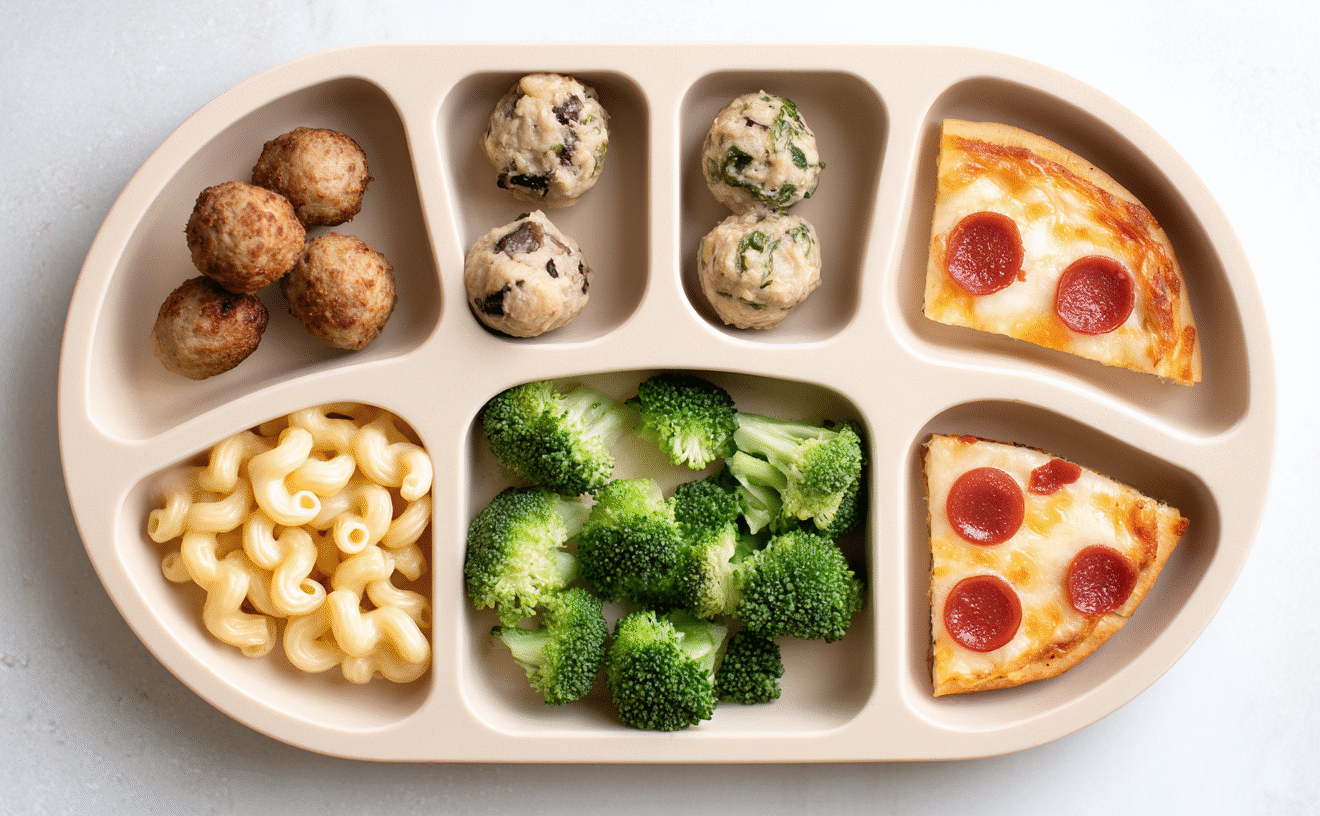
1. Mini Chicken Meatballs with Dipping Sauce
- Why it works: Meatballs are fun to eat and can be easily dipped in various sauces.
- Ingredients:
- 1 lb ground chicken
- 1/2 cup breadcrumbs (whole wheat preferred)
- 1/4 cup grated Parmesan cheese
- 1 egg
- 1 tbsp olive oil
- 1/2 tsp garlic powder
- Salt and pepper to taste
- Instructions:
- Preheat oven to 375°F (190°C).
- In a bowl, combine all ingredients.
- Roll into small meatballs (about 1 inch in diameter).
- Place on a baking sheet lined with parchment paper.
- Bake for 15-20 minutes, or until cooked through.
- Serve with your toddler’s favorite dipping sauce (e.g., marinara, yogurt dip, honey mustard).
- Picky Eater Troubleshooting:
- If your toddler is texture-sensitive, try making the meatballs very small and soft.
- Offer a variety of dipping sauces to see which one they prefer.
- Serve with a familiar side dish like steamed broccoli or mashed potatoes.
2. Cheesy Broccoli and Chicken Bites
- Why it works: Combines familiar flavors (cheese and chicken) with a hidden vegetable (broccoli).
- Ingredients:
- 1 cup cooked chicken, shredded
- 1 cup cooked broccoli, finely chopped
- 1/2 cup shredded cheddar cheese
- 1/4 cup breadcrumbs
- 1 egg
- Salt and pepper to taste
- Instructions:
- Preheat oven to 375°F (190°C).
- In a bowl, combine all ingredients.
- Form into small patties or nuggets.
- Place on a baking sheet lined with parchment paper.
- Bake for 15-20 minutes, or until golden brown.
- Picky Eater Troubleshooting:
- Make sure the broccoli is very finely chopped to minimize texture issues.
- Use a cheese that your toddler already enjoys.
- Serve with a side of applesauce or yogurt.
3. Mini Pizzas on Whole Wheat English Muffins
- Why it works: Pizza is a classic kid-friendly food, and making mini pizzas is a fun activity.
- Ingredients:
- Whole wheat English muffins, split in half
- Marinara sauce
- Shredded mozzarella cheese
- Toppings of your choice (e.g., pepperoni, cooked chicken, vegetables)
- Instructions:
- Preheat oven to 350°F (175°C).
- Spread marinara sauce on each English muffin half.
- Sprinkle with mozzarella cheese.
- Add toppings of your choice.
- Bake for 10-12 minutes, or until cheese is melted and bubbly.
- Picky Eater Troubleshooting:
- Let your toddler choose their own toppings.
- Offer a variety of toppings, including some familiar favorites.
- Cut the pizzas into small squares or triangles for easier handling.
4. Mac and Cheese with Hidden Veggies
- Why it works: Mac and cheese is a comfort food staple, and you can sneak in extra nutrients with pureed vegetables.
- Ingredients:
- 1 cup elbow macaroni
- 2 cups milk
- 2 tbsp butter
- 2 tbsp flour
- 1 cup shredded cheddar cheese
- 1/2 cup pureed vegetables (e.g., butternut squash, sweet potato, cauliflower)
- Salt and pepper to taste
- Instructions:
- Cook macaroni according to package directions. Drain and set aside.
- In a saucepan, melt butter over medium heat.
- Whisk in flour and cook for 1 minute.
- Gradually whisk in milk until smooth.
- Bring to a simmer, stirring constantly.
- Reduce heat and stir in cheese until melted.
- Stir in pureed vegetables.
- Add cooked macaroni and stir to combine.
- Season with salt and pepper to taste.
- Picky Eater Troubleshooting:
- Start with a small amount of pureed vegetables and gradually increase the amount as your toddler gets used to the flavor.
- Use a cheese that your toddler enjoys.
- Serve with a side of steamed green beans or carrot sticks.
5. Quesadillas with Black Beans and Cheese
- Why it works: Quesadillas are quick, easy, and customizable.
- Ingredients:
- Whole wheat tortillas
- Shredded cheddar cheese
- Black beans, rinsed and drained
- Instructions:
- Sprinkle cheese and black beans on one half of a tortilla.
- Fold the tortilla in half.
- Cook in a skillet over medium heat for 2-3 minutes per side, or until cheese is melted and tortilla is golden brown.
- Cut into wedges.
- Picky Eater Troubleshooting:
- Offer a variety of fillings, such as shredded chicken, cooked vegetables, or guacamole.
- Serve with a side of salsa or sour cream.
- Cut the quesadillas into fun shapes using cookie cutters.
6. Scrambled Eggs with Toast and Avocado
- Why it works: Eggs are a great source of protein and can be easily customized.
- Ingredients:
- Eggs
- Milk (optional)
- Butter or oil
- Whole wheat toast
- Avocado, mashed
- Instructions:
- Whisk eggs with a splash of milk (optional).
- Melt butter or oil in a skillet over medium heat.
- Pour eggs into the skillet and cook, stirring occasionally, until set.
- Serve with toast and mashed avocado.
- Picky Eater Troubleshooting:
- Offer a variety of toppings for the toast, such as butter, jam, or cream cheese.
- Cut the toast into fun shapes.
- Serve with a side of fruit.
7. Fish Sticks (Baked, Not Fried) with Sweet Potato Fries
- Why it works: Fish sticks are a familiar food, and baking them instead of frying makes them healthier.
- Ingredients:
- Fish sticks (look for brands with whole grain breading)
- Sweet potatoes, cut into fries
- Olive oil
- Salt and pepper to taste
- Instructions:
- Preheat oven to 400°F (200°C).
- Toss sweet potato fries with olive oil, salt, and pepper.
- Spread fries in a single layer on a baking sheet.
- Bake for 20-25 minutes, or until tender and golden brown.
- Bake fish sticks according to package directions.
- Serve together.
- Picky Eater Troubleshooting:
- Offer a variety of dipping sauces for the fish sticks and fries, such as ketchup, tartar sauce, or honey mustard.
- Cut the sweet potato fries into different shapes.
- Serve with a side of steamed green beans or peas.
8. Chicken and Vegetable Skewers
- Why it works: Skewers are fun to eat and can be customized with your toddler’s favorite vegetables.
- Ingredients:
- Cooked chicken, cut into cubes
- Cherry tomatoes
- Cucumber chunks
- Bell pepper chunks
- Wooden skewers (soak in water for 30 minutes before using)
- Instructions:
- Thread chicken and vegetables onto skewers.
- Serve with a dipping sauce of your choice.
- Picky Eater Troubleshooting:
- Let your toddler help assemble the skewers.
- Offer a variety of vegetables to choose from.
- Serve with a side of rice or quinoa.
9. Lentil Soup
- Why it works: Lentil soup is packed with nutrients and can be easily pureed for texture-sensitive toddlers.
- Ingredients:
- 1 cup brown or green lentils, rinsed
- 4 cups vegetable broth
- 1 onion, chopped
- 2 carrots, chopped
- 2 celery stalks, chopped
- 1 tsp olive oil
- 1/2 tsp garlic powder
- Salt and pepper to taste
- Instructions:
- Heat olive oil in a large pot over medium heat.
- Add onion, carrots, and celery and cook until softened.
- Add lentils, vegetable broth, garlic powder, salt, and pepper.
- Bring to a boil, then reduce heat and simmer for 30-40 minutes, or until lentils are tender.
- Puree soup with an immersion blender or in a regular blender until smooth (optional).
- Serve warm.
- Picky Eater Troubleshooting:
- If your toddler is sensitive to textures, puree the soup until completely smooth.
- Serve with a side of bread or crackers.
- Add a dollop of yogurt or sour cream.
10. Turkey and Cheese Roll-Ups
- Why it works: Simple, quick, and easy for little hands to manage.
- Ingredients:
- Whole wheat tortillas
- Sliced turkey breast
- Sliced cheese (cheddar, mozzarella, or provolone)
- Instructions:
- Lay a tortilla flat.
- Place a slice of cheese and a slice of turkey on the tortilla.
- Roll up tightly.
- Cut into bite-sized pieces.
- Picky Eater Troubleshooting:
- Offer different types of cheese and turkey.
- Add a thin layer of cream cheese or hummus for extra flavor.
- Serve with a side of grapes or cucumber slices.
Tips for Introducing New Foods to Picky Eaters
Introducing new foods to a picky eater can be a slow and gradual process. Here are some tips to make it easier:
- Start Small: Offer just a small taste of the new food alongside familiar favorites.
- Serve it with Something They Like: Pair the new food with something your toddler already enjoys.
- Don’t Force It: Forcing a child to eat will likely backfire. Instead, focus on creating a positive experience.
- Be a Role Model: Let your toddler see you enjoying a variety of foods.
- Offer Variety: Continue to offer a variety of foods, even if your toddler rejects them at first.
- Make it Fun: Use creative presentation to make new foods more appealing.
- Involve Them in the Process: Let your toddler help with grocery shopping or meal preparation.
- Be Patient: It can take multiple exposures to a new food before a toddler will try it.
Safe Textures and Portion Sizes for Toddlers
- Cut food into small, bite-sized pieces to prevent choking.
- Avoid whole grapes, nuts, popcorn, and hard candies until your child is older.
- Cook vegetables until soft to make them easier to chew.
- Offer small portions to avoid overwhelming your toddler. You can always offer more if they are still hungry.
- Pay attention to your child’s cues and stop feeding them when they indicate they are full.
When to Seek Professional Help
While picky eating is common, it’s important to consult with a pediatrician or registered dietitian if you have concerns about your child’s growth, weight, or nutritional intake. Signs that may warrant professional help include:
- Poor weight gain or weight loss
- Refusal to eat entire food groups
- Extreme food selectivity
- Signs of nutritional deficiencies
- Significant mealtime stress or anxiety
Conclusion: A Journey, Not a Race
Dealing with a picky eater can be frustrating, but remember that it’s a journey, not a race. With patience, understanding, and the right strategies, you can help your toddler develop a healthier relationship with food and enjoy more nutritious meals. Focus on creating a positive mealtime environment, offering a variety of healthy options, and celebrating small victories. You’ve got this!