Vegetarian Toddler Dinner Recipes for Ages 1–3: A Parent’s Guide to Nutritious & Delicious Meals
- December 16, 2025
- 0
- 11 Min Read
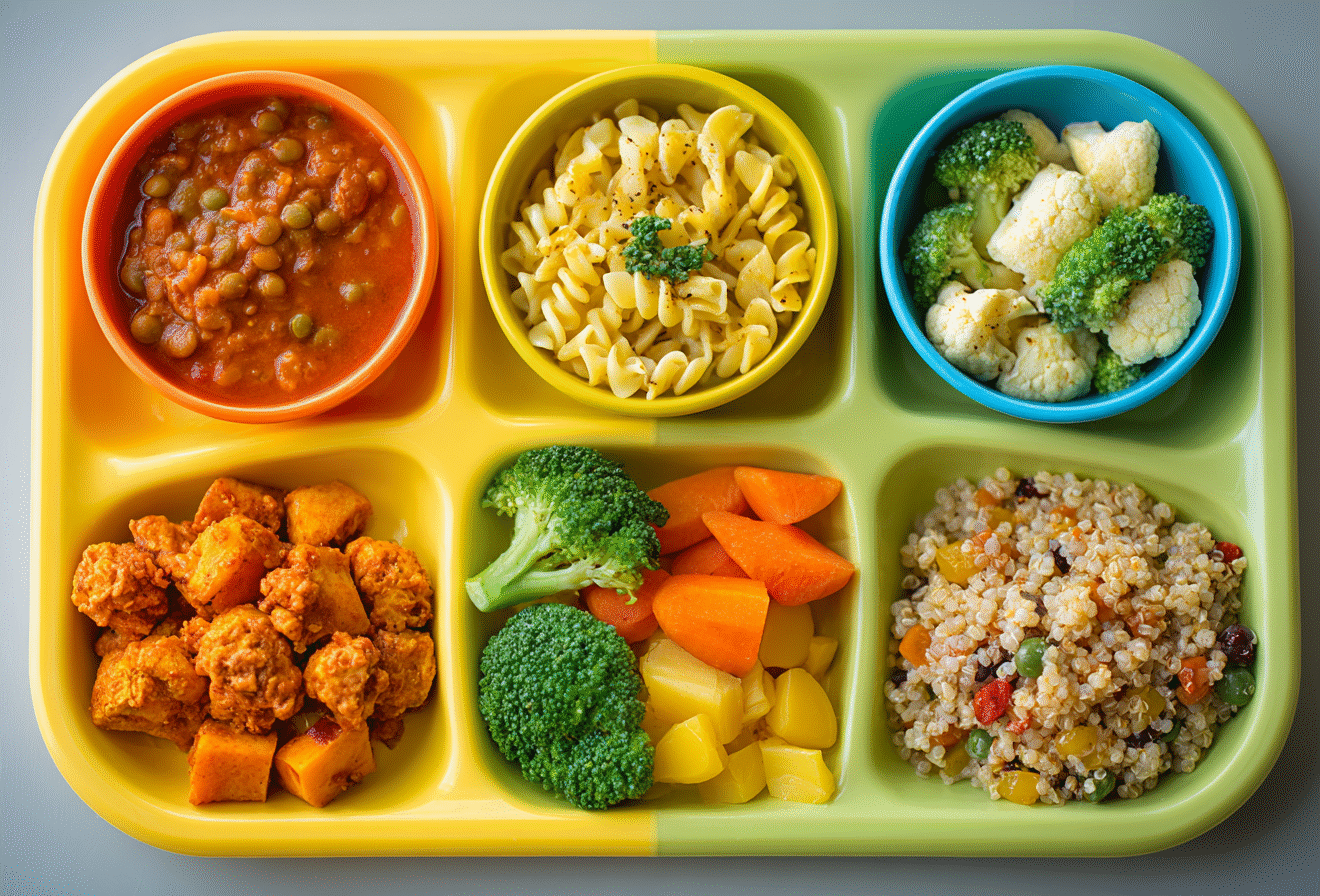
Vegetarian Toddler Dinner Recipes for Ages 1–3 in 2025 Raising a vegetarian toddler is a wonderful way to instill healthy eating habits early on. But figuring out what to feed them for dinner every night can feel like a daunting task! This comprehensive guide is designed to help you navigate the world of vegetarian toddler dinners, providing you with easy, nutritious, and delicious recipes that your little one will actually enjoy. We’ll cover everything from essential nutrients and safe textures to tackling picky eating and planning balanced meals. Let’s dive in!
Table of Contents
A well-planned vegetarian diet can be incredibly healthy for toddlers, offering a wealth of vitamins, minerals, and fiber. It can also help establish lifelong healthy eating patterns. However, it’s crucial to ensure your toddler is getting all the necessary nutrients for optimal growth and development.
Key Nutrients for Vegetarian Toddlers (Ages 1-3)
Before we jump into recipes, let’s talk about the key nutrients your vegetarian toddler needs and where to find them:
- Protein: Essential for growth and development. Good sources include:
- Lentils
- Beans (black beans, kidney beans, chickpeas)
- Tofu
- Edamame
- Eggs (if your toddler eats them)
- Dairy products (if your toddler eats them – yogurt, cheese)
- Nut butters (ensure no allergies and serve safely)
- Quinoa
- Seeds (ground flaxseed, chia seeds)
- Iron: Important for brain development and preventing anemia. Plant-based iron is less readily absorbed than animal-based iron, so pairing it with vitamin C is crucial. Good sources include:
- Fortified cereals
- Beans
- Lentils
- Spinach
- Tofu
- Dried fruits (raisins, apricots)
- Vitamin C Boosters: Bell peppers, broccoli, tomatoes, citrus fruits
- Calcium: Essential for strong bones and teeth. Good sources include:
- Dairy products (if your toddler eats them – milk, yogurt, cheese)
- Fortified plant-based milk (almond, soy, oat)
- Tofu (calcium-set)
- Dark leafy greens (kale, collard greens)
- Fortified cereals
- Vitamin B12: Found almost exclusively in animal products. Vegetarian toddlers need a reliable source, which usually comes from:
- Fortified foods (nutritional yeast, fortified cereals, fortified plant-based milk)
- B12 supplements (consult with your pediatrician)
- Vitamin D: Important for calcium absorption and bone health. Sources include:
- Fortified foods (milk, yogurt, cereals)
- Sunlight (with appropriate sun protection)
- Vitamin D supplements (often recommended)
- Zinc: Crucial for immune function and growth. Good sources include:
- Beans
- Lentils
- Nuts (ensure no allergies and serve safely)
- Seeds
- Fortified cereals
- Omega-3 Fatty Acids: Important for brain development. Good sources include:
- Flaxseeds (ground)
- Chia seeds
- Walnuts (finely ground or in nut butter form – ensure no allergies)
- Fortified eggs (if your toddler eats them)
- DHA supplements (algae-based)
Portion Sizes for Toddlers (Ages 1-3)
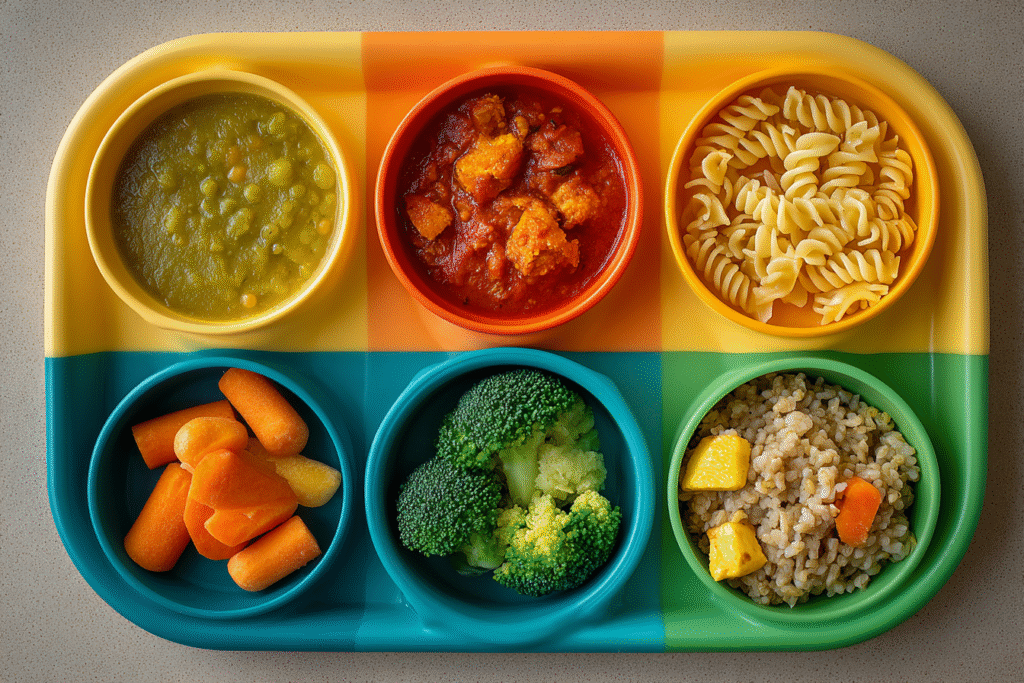
Remember that toddlers have small stomachs! Here’s a general guideline for portion sizes. Always consult with your pediatrician or a registered dietitian for personalized recommendations.
- Protein: 1-2 tablespoons
- Vegetables: 1-2 tablespoons
- Fruits: 1-2 tablespoons
- Grains/Starches: 1/4 – 1/2 cup
- Dairy/Calcium Source: 1/4 – 1/2 cup (or equivalent)
Safe Textures for Toddlers
Toddlers are still developing their chewing and swallowing skills. Always prioritize safety when preparing their meals:
- Avoid: Whole grapes, whole nuts, popcorn, hard candies, raw carrots (unless finely grated), hot dogs (unless cut into small, safe pieces).
- Prepare: Cut food into small, bite-sized pieces (about the size of your pinky fingernail). Cook vegetables until soft. Mash or puree foods if necessary. Spread nut butters thinly.
Vegetarian Toddler Dinner Recipes: Delicious & Nutritious Ideas
Now for the fun part! Here are some easy and delicious vegetarian dinner recipes that are perfect for toddlers aged 1-3. Remember to adjust portion sizes and textures as needed for your child’s age and development.
1. Lentil Soup with Whole Wheat Bread
- Why it’s great: Packed with protein, iron, and fiber. Easy to customize with different vegetables.
- Ingredients:
- 1 tablespoon olive oil
- 1/2 onion, chopped
- 1 carrot, chopped
- 1 celery stalk, chopped
- 1 cup red lentils, rinsed
- 4 cups vegetable broth
- 1 teaspoon dried thyme
- 1/2 teaspoon cumin
- Salt and pepper to taste
- Whole wheat bread, for serving
- Instructions:
- Heat olive oil in a pot over medium heat. Add onion, carrot, and celery and cook until softened, about 5 minutes.
- Add lentils, vegetable broth, thyme, and cumin. Bring to a boil, then reduce heat and simmer for 20-25 minutes, or until lentils are tender.
- Season with salt and pepper to taste.
- Puree a portion of the soup for a smoother texture if needed.
- Serve with whole wheat bread cut into small pieces.
- Nutrition Tip: Serve with a side of chopped bell peppers for a vitamin C boost to enhance iron absorption.
2. Black Bean Quesadillas with Avocado
- Why it’s great: Quick, easy, and a good source of protein and healthy fats.
- Ingredients:
- Whole wheat tortillas
- 1 can (15 ounces) black beans, rinsed and drained
- 1/4 cup shredded cheddar cheese (or dairy-free alternative)
- 1/4 avocado, mashed
- Instructions:
- Mash the black beans with a fork.
- Spread the mashed beans on one half of the tortilla.
- Sprinkle with cheese.
- Fold the tortilla in half.
- Cook in a skillet over medium heat until the tortilla is golden brown and the cheese is melted, about 2-3 minutes per side.
- Cut into small wedges.
- Serve with mashed avocado.
- Nutrition Tip: Add finely chopped spinach or bell peppers to the black bean mixture for extra nutrients.
3. Tofu Scramble with Toast and Berries
- Why it’s great: A protein-packed and versatile meal that can be customized with different vegetables.
- Ingredients:
- 1 tablespoon olive oil
- 1/4 onion, chopped
- 1/4 bell pepper, chopped
- 1/2 cup crumbled tofu (firm or extra-firm)
- 1/4 teaspoon turmeric (for color and antioxidants)
- Salt and pepper to taste
- Whole wheat toast, cut into small pieces
- Berries (strawberries, blueberries, raspberries), cut into small pieces
- Instructions:
- Heat olive oil in a skillet over medium heat. Add onion and bell pepper and cook until softened, about 5 minutes.
- Add crumbled tofu and turmeric. Cook, stirring occasionally, until heated through and slightly browned, about 5-7 minutes.
- Season with salt and pepper to taste.
- Serve with whole wheat toast and berries.
- Nutrition Tip: Tofu is a complete protein source, meaning it contains all nine essential amino acids.
4. Veggie Pasta with White Bean Sauce
- Why it’s great: A fun and flavorful way to get your toddler to eat their vegetables.
- Ingredients:
- Whole wheat pasta (small shapes like penne or rotini)
- 1 tablespoon olive oil
- 1/2 onion, chopped
- 1 clove garlic, minced
- 1 can (15 ounces) cannellini beans, rinsed and drained
- 1/2 cup vegetable broth
- 1/4 cup grated Parmesan cheese (optional, or use nutritional yeast)
- 1 cup chopped vegetables (broccoli, zucchini, carrots), steamed
- Instructions:
- Cook pasta according to package directions.
- While pasta is cooking, heat olive oil in a skillet over medium heat. Add onion and garlic and cook until softened, about 5 minutes.
- Add cannellini beans and vegetable broth. Bring to a simmer and cook for 5 minutes.
- Transfer the bean mixture to a blender or food processor and blend until smooth.
- Stir the white bean sauce into the cooked pasta.
- Add the steamed vegetables.
- Sprinkle with Parmesan cheese or nutritional yeast (if using).
- Nutrition Tip: White beans are a good source of protein and fiber. Steaming the vegetables makes them easier for toddlers to chew.
5. Sweet Potato and Chickpea Curry with Rice
- Why it’s great: A flavorful and aromatic dish that’s packed with nutrients.
- Ingredients:
- 1 tablespoon coconut oil
- 1/2 onion, chopped
- 1 clove garlic, minced
- 1 teaspoon grated ginger
- 1 teaspoon curry powder
- 1/2 teaspoon turmeric
- 1 sweet potato, peeled and diced
- 1 can (15 ounces) chickpeas, rinsed and drained
- 1 can (14.5 ounces) diced tomatoes, undrained
- 1/2 cup coconut milk
- Cooked brown rice, for serving
- Instructions:
- Heat coconut oil in a pot over medium heat. Add onion, garlic, and ginger and cook until softened, about 5 minutes.
- Add curry powder and turmeric and cook for 1 minute more.
- Add sweet potato, chickpeas, diced tomatoes, and coconut milk. Bring to a simmer, then reduce heat and cook for 15-20 minutes, or until sweet potato is tender.
- Serve over cooked brown rice.
- Nutrition Tip: Sweet potatoes are an excellent source of vitamin A and fiber.
6. Mini Veggie Frittatas
- Why it’s great: Portable, customizable, and a good source of protein and vegetables.
- Ingredients:
- 6 eggs (or egg substitute)
- 1/4 cup milk (or plant-based milk)
- 1/4 cup chopped vegetables (broccoli, spinach, bell peppers)
- 1/4 cup shredded cheese (optional, or use dairy-free alternative)
- Salt and pepper to taste
- Instructions:
- Preheat oven to 350°F (175°C).
- Whisk together eggs and milk in a bowl.
- Stir in vegetables and cheese (if using).
- Season with salt and pepper to taste.
- Pour the mixture into greased muffin tins.
- Bake for 15-20 minutes, or until set.
- Let cool slightly before serving.
- Nutrition Tip: These frittatas can be made ahead of time and stored in the refrigerator for a quick and easy meal.
7. Quinoa Bowl with Roasted Vegetables and Tofu
- Why it’s great: A complete and balanced meal with protein, complex carbohydrates, and healthy fats.
- Ingredients:
- Cooked quinoa
- Roasted vegetables (broccoli, carrots, sweet potatoes, bell peppers)
- Baked or pan-fried tofu (cubed)
- Drizzle of olive oil or tahini
- Instructions:
- Roast your favorite vegetables until tender.
- Bake or pan-fry tofu until golden brown.
- Assemble the bowl with quinoa, roasted vegetables, and tofu.
- Drizzle with olive oil or tahini.
- Nutrition Tip: Quinoa is a complete protein source and a good source of fiber.
8. Creamy Tomato Soup with Grilled Cheese Croutons
- Why it’s great: A comforting and classic meal with a fun twist.
- Ingredients:
- 1 tablespoon olive oil
- 1/2 onion, chopped
- 2 cloves garlic, minced
- 1 can (28 ounces) crushed tomatoes
- 1 cup vegetable broth
- 1/2 cup heavy cream (or coconut cream for dairy-free)
- Salt and pepper to taste
- Whole wheat bread
- Cheese (cheddar, mozzarella, or dairy-free alternative)
- Instructions:
- Heat olive oil in a pot over medium heat. Add onion and garlic and cook until softened, about 5 minutes.
- Add crushed tomatoes and vegetable broth. Bring to a simmer and cook for 15 minutes.
- Stir in heavy cream or coconut cream.
- Season with salt and pepper to taste.
- Blend the soup with an immersion blender until smooth.
- Make grilled cheese sandwiches using whole wheat bread and cheese.
- Cut the grilled cheese into small cubes to serve as croutons.
- Nutrition Tip: Serve with a side of steamed green beans for added nutrients.
9. Edamame and Corn Fritters
- Why it’s great: A fun and flavorful way to get your toddler to eat their vegetables.
- Ingredients:
- 1 cup frozen edamame, shelled and cooked
- 1 cup frozen corn, cooked
- 1/2 cup all-purpose flour (or gluten-free alternative)
- 1 egg (or flax egg)
- 1/4 cup chopped cilantro
- Salt and pepper to taste
- Olive oil, for frying
- Instructions:
- In a bowl, combine edamame, corn, flour, egg, cilantro, salt, and pepper.
- Heat olive oil in a skillet over medium heat.
- Drop spoonfuls of the mixture into the hot oil and flatten slightly.
- Cook for 2-3 minutes per side, or until golden brown.
- Let cool slightly before serving.
- Nutrition Tip: Edamame is a good source of protein and fiber.
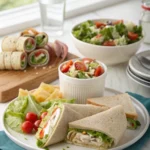
10. Hummus and Veggie Wraps
- Why it’s great: A quick and easy meal that’s perfect for on-the-go.
- Ingredients:
- Whole wheat tortillas
- Hummus
- Chopped vegetables (cucumber, bell peppers, carrots)
- Instructions:
- Spread hummus on a tortilla.
- Top with chopped vegetables.
- Roll up the tortilla.
- Cut into bite-sized pieces.
- Nutrition Tip: Hummus is a good source of protein and fiber.
Tips for Picky Eaters
Dealing with a picky eater is a common challenge for parents. Here are some tips to help encourage your toddler to try new foods:
- Offer a variety of foods: Expose your toddler to a wide range of flavors and textures.
- Don’t force them to eat: Pressuring them can create negative associations with food.
- Make mealtime fun: Create a positive and relaxed atmosphere.
- Serve small portions: Overwhelming portions can discourage them from trying new foods.
- Involve them in meal preparation: Let them help wash vegetables or stir ingredients.
- Be a role model: Eat healthy foods yourself!
- Offer dips: Hummus, yogurt, or guacamole can make vegetables more appealing.
- Hide vegetables in familiar foods: Grate vegetables into sauces or add them to smoothies.
- Be patient and persistent: It can take multiple exposures for a child to accept a new food.
- Consult with a pediatrician or registered dietitian: If you have concerns about your toddler’s eating habits or nutritional intake.
Meal Planning for a Vegetarian Toddler
Planning ahead can make it easier to ensure your toddler is getting a balanced and nutritious diet.
- Create a weekly meal plan: This will help you stay organized and ensure you have all the necessary ingredients on hand.
- Batch cook: Prepare large batches of meals like lentil soup or veggie pasta and freeze them for later.
- Keep healthy snacks readily available: Fruits, vegetables, yogurt, and cheese are good options.
- Read food labels carefully: Pay attention to added sugars, sodium, and artificial ingredients.
- Don’t be afraid to experiment: Try new recipes and flavors to keep things interesting.
Conclusion
Feeding a vegetarian toddler can be a rewarding experience. By focusing on nutrient-dense foods, safe textures, and a positive mealtime environment, you can help your little one thrive on a plant-based diet. Remember to be patient, persistent, and most importantly, have fun! With a little planning and creativity, you can create delicious and nutritious vegetarian meals that your toddler will love. Always consult with your pediatrician or a registered dietitian for personalized advice and to address any specific concerns you may have. Happy cooking!